The New Body News and Wellness Letter eZine
Issue LIX July 2007
Laura M. Turner is a certified personal trainer and Editor-At-Large of The New Body News and Wellness Letter eZine. This was its website, dedicated to building a better YOU!
Content is from the site's July 2007 Issue LIX providing a glimpse of what this site offered its readership.
If you are interested in Laura M. Turner and power and meaning of personal development go to her current website at https://trans4mind.com/ to learn more.

The Online Magazine Healthy People Read.
"Give and it shall be given you...
He that watereth shall be watereth himself."
~Ralph Waldo Emerson
**Issue LIX: July 2007**
Sponsored by: www.beauty-and-body.com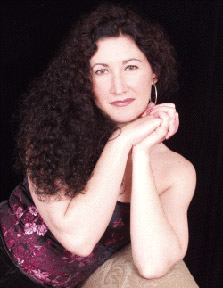
Editor-at-Large: Laura Turner, M.S., CHHP
ISSN: 1554-8384
About Laura M. Turner, M.S., CHHP
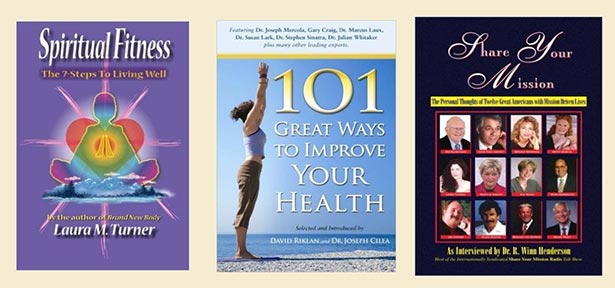
Laura M. Turner is a 15-year veteran fitness instructor, fitness trainer and natural health practitioner who is dedicated to inspiring and educating others about the benefits of natural health and fitness. Laura is also a noted journalist, publishing her work in many publications national and regional, including American Fitness, Natural Bodybuilding and Fitness and Adirondack Life.
In 2003, Laura launched the publishing company Violet Prose Publications to publish her growing number of books which include Brand New Body and Spiritual Fitness: The 7-Steps to Living Well, as well as her online magazine: The New Body News and Wellness Letter and a host of inspirational articles on health and wellness.
Laura has a B.A. in English Literature with a graduate degree in Health Sciences. Presently, she is working toward her Ph.D. in Natural Health & Complimentary Medicine and building her online business Beauty & Body Enterprises which, in addition to Violet Prose Publications, includes the weekly podcast: Tuesday Body Talk and inspiring others to become an ambassadors of health through her Young Living Organization.
Laura's Musings
Simplicity, Patience And Compassion
Weeks Of July 23, 2007 - August 5, 2007
From The Desk Of Laura M. Turner:
In the past I've written, according to Eastern Taoists, there are three treasures on the pathway to enlightenment: simplicity, patience and compassion. And this past month I've found, there is no better time to exercise these treasures than when a loved one is taken ill as my mother has been. As I continue through my life I can say with certainty, at times, with all the best of preventative intention, the body can give in to illness and malfunction. This too is all part of the plan.
The true message of care-giving then, is to look for the blessing in the adversity. Adversity always asks us to take a step outside of ourselves to become available for the needs of another, reprioritize what is truly important to us and to become most efficient in seeking those things in life that give meaning. This month, I've had to remind myself often of these three treasures, and today I revisit these ideas with you. Each day they continue to bring me peace as I await, patiently, for life to return to harmony and balance as it always inevitably does. I hope you find they will bring you peace and comfort when you need them, too.
With this in mind, I am reminded by author Thomas Cleary that we should always make an effort to act sincerely, regardless of circumstances. In Taoist Meditation he writes: €œto choose what is good and hold onto it firmly is a matter of sincerity.€ Compassion, as well as challenge helps us to define what is most important to us; a reoccurring theme throughout the three treasures. To me, this involves being awake and aware in our lives to see the ways in which we are available to give sincerity and service.
I hope the take home message for you is to be aware of the ways spirit is working through you. Remember: You are the vessel of peace for others and the world. I believe, the more we become vulnerable to trust and open ourselves to the natural flow of events, the more we can allow compassionate behavior into our lives and become enlightened each and every day.
Laugh and Be Well,
Laura
Health Watch:
Chromium Picolinate And Weight Loss
By Amanda Allen
Chromium picolinate is a nutritional supplement that works to increase the efficiency of insulin to optimal levels. Gaining increased popularity in the United States, this supplement has been touted a miracle mineral, one advertised to have myriad effects including weight loss, mood enhancement, energy promotion, increase in life span, and even the prevention of acne (Krzanowski, 1996). The most common usage for chromium picolinate is as a weight loss aid; claims that this supplement can melt fat, drastically reduce appetite, and increase metabolism are rampant and account for the popularity of chromium picolinate in our diet-obsessed culture. Additionally, scientific research is generally unsupportive of the weight loss claims surrounding chromium picolinate; consumers must be aware of these discrepancies when making a decision to take this or any other nutritional supplement.
What is Chromium Picolinate?
This popular nutritional supplement is a combination of the element chromium and picolinic acid. Chromium is a naturally-occurring mineral, trace amounts of which are found in everyday foods like meat, poultry, fish, and whole-grain breads. When foods are processed, they are stripped of natural chromium, making our foods generally very low in chromium; studies estimate an average daily chromium consumption of 33 mcg.
The FDA recommends a daily chromium intake of approximately 130 mcg, as infinitesimal amounts of chromium are needed to aid the transport of blood glucose across cell membranes. Combining chromium with picolinic acid simply aids in efficient chromium absorption, and it is this combined form that is popular on the diet market today.
How Does Chromium Picolinate Work?
After eating, the human body secretes the hormone insulin. In general, the primary function of insulin is to transport glucose to the body's cells in order to provide energy that facilitates cell functioning. It is speculated that chromium picolinate works by stimulating the activity of insulin, thus significantly aiding the body's glucose and fat metabolism, managing the breakdown of glucose and fat.
The exact mechanisms by which chromium improves this insulin efficiency are currently unclear; it has been suggested that chromium somehow works to increase sensitivity of insulin receptors (Krzanowski, 1996). However, because research has yet to produce any definite answers as to the exact function of chromium picolinate, competing theories about its precise effects exist.
Some claim that that the improved insulin efficiency causes an increase in the production of seratonin, which subsequently reduces appetite. Still others assert that chromium can regulate the fat-production processes in the body, preventing excess fat from forming. One hypothesis states that chromium picolinate increases protein synthesis, which in turn stimulates muscle growth. Heavy marketing of chromium picolinate as a dietary aid focuses on chromium picolinate's reputed ability to reduce the body's fat stores while conserving lean muscle mass.
Claims About Chromium Picolinate
The internet is littered with sites that laud chromium picolinate as the ultimate weight loss tool. Many of these sites market chromium picolinate as having a very specific effect on the body's energy supply, tagging the supplement €œan indispensable biochemical partner of insulin€. As such, chromium picolinate will help the dieter burn calories and control their appetite while melting away undesirable body fat. In addition to these appealing claims is the statement that chromium picolinate will increase and even tone lean muscle mass during the weight loss process. The supplement is therefore a vital addition to recent €œexercise in a bottle€ and herbal fat burner pills. These diet compounds, which are readily available over the internet, often combine chromium picolinate with dangerous diuretics.
Such combination tablets are risky, as any interactions between chromium picolinate and other supplements remain unknown at this time. Nevertheless, chromium picolinate continues to appear as an ingredient in products with promising names like €œRipped Action,€ €œFat Burner Bars,€ and €œRipped Fast,€ alluding to the spectacular results that a dieter might expect from chromium picolinate.
Weight loss is not the only effect that one can expect from chromium picolinate, however. One bodybuilding site even refers to uncited œevidence that chromium picolinate can expand the life span via œage-slowing effects while as improving circulation. The site's concluding statement on the potency of chromium picolinate is simply: œwhoa, that is powerful!!€
Does Chromium Picolinate Effectively Aid Weight Loss?
Scientific research has been largely unsupportive of the appealing claims made about chromium picolinate's ability to significantly aid weight loss. Because chromium picolinate professes an ability to reduce fat while maintaining and increasing lean muscle mass, the most relevant studies are those examining body composition. These measurements typically include percent body fat, body weight, and lean body mass.
The majority of scientific evidence suggests that chromium picolinate is neither a helpful nor beneficial part of weight loss programs. In the absence of exercise, it may even cause weight gain. An important side note is the fact that all groups involved in chromium picolinate studies, particularly those groups of obese subjects, managed to lose body weight and fat when enrolled in exercise training programs. While chromium picolinate did not enhance weight loss as expected, participants still lost weight and gained muscle by exercising. Although not the easy solution desired by many dieters, exercise is a proven and safe method to lose weight, to gain muscle, and to improve general health.
Does Chromium Picolinate Have Any Adverse Effects?
Chromium picolinate, though not a proven method of weight loss, remains among the most popular dietary supplements available over the counter. Because it is taken daily by millions, it is important to evaluate any potential risks involved in chromium supplementation. Unfortunately, there is a scarcity of research concerning these side effects.
Should You Take Chromium Picolinate?
Despite rampant claims that chromium picolinate is a weight loss miracle that will melt fat, improve metabolism, and increase muscle mass, scientific evidence overwhelmingly indicates that the supplement does nothing of the kind. When combined with exercise, chromium supplementation does nothing to enhance weight loss as compared to exercise alone, in study after study. The case of chromium picolinate should caution consumers against believing miracle weight loss claims. When advertised on the internet, chromium picolinate is presented as a reliable, safe, and fast way to reduce body fat: actual evidence presents a very different picture of this supplement. Taking a daily dose of chromium picolinate will not likely produce any drastic results, and certainly will not produce effects that could not be achieved with exercise alone. Consumers should always be wary of dietary supplements touted as €œmiracles,€ and investigate the truth behind flashy claims before deciding to take any nutritional aid.
References:
Grant, K.E., Chandler, R.M., Castle, A.M., & Ivy, J.L. (1997). Medicine and Science in Sports and Exercise, 29(8), 992-998.
Harris, C, Hoeger, W., Long, E.M., Welch, M., Hafner, T.L., Kjorstad, R.L., & Hopkins, D.R. (1998). Medicine and Science in Sports and Exercise, 30(5), 62.
Krzanowski, J.J. (1996). Chromium picolinate. Journal of the Florida Medical Association, 83(1), 29-31.
Lukaski, H.C., Bolonchuk, W.W., Siders, W.A., & Milne, D.B. (1996). Chromium supplementation and resistance training. American Journal of Clinical Nutrition, 63, 954- 965.
Trent, L.K, & Theiding-Cancel, D. (1995). Effects of chromium picolinate on body composition. Journal of Sports Medicine and Physical Fitness, 35(4), 273-280.
Walker, L.S., Bemben, M.G., Bemben, D.A., Knehans, A.W. (1998). Medicine and Science in Sports and Exercise, 30(12), 1730-1737
Food & Nutrition:
Nine Anti-aging Tips To Stay Younger Longer
By Barbara Morris, R.Ph.
Nine Anti-aging Tips To Stay Younger Longer
By Barbara Morris, R.Ph.
Can't figure out where to start to improve the quality of your lifestyle? Here are some simple things to help get started. If you can follow the suggestions for a month, you will be well on your way to reducing belly fat AND establishing an anti-aging lifestyle.. It's not difficult €“ if you really want to do it. Remember, these are baby steps, but you have to start some place.
1). Check your fridge. If you use butter, you can use less by diluting it half-and-half with olive oil. Let a bar of butter soften to room temperature. Beat it smooth and gradually beat in an equal amount of olive oil. It will be runny but will set up to a soft spread in the fridge.
2). Rethink the mayo. If you can't live without it, make your own with olive oil. Then you will really have something worthwhile to spread on bread or to make a salad.
3). If you eat peanut butter, buy Smart Balance peanut butter for it's omega- 3 content. If you are not taking an omega-3 supplement, you should.
4). Keep a gallon bottle of water on the kitchen counter or at work. Drink at least half of it every day. Having it in plain sight will help you drink more of it.
5). Check your pantry. Don't restock chips, cookies, soda, toaster pastries, sugary breakfast "cereals" (a misnomer if ever there was one!) It's just as quick and easy to scramble a couple of eggs for breakfast as it is to wait for a pastry to toast. I know how tough it is to get rid of the nutritionally bankrupt junk, so do it in small steps if you can't do it cold turkey.
6). Substitute whole grain bread for white bread. Beware of "wheat" bread €“ it's probably not whole wheat. If possible, go to a whole foods market and get some real whole wheat bread. In my area, I can buy incredibly good whole grain bread from Alvarado Street Bakery. You can buy it online, and if you do, put it in the freezer the minute it arrives. Because it's "live" and preservative free, it
will get moldy very quickly if you leave it out. I particularly enjoy the Alvarado sprouted whole grain bread.
7). Having a whole foods market nearby makes it easy to cut down on processed food. If you make a trip a couple of times a week you can get all the super-fresh veggies and fruit you will need to provide a healthier diet for your family. For protein, focus on chicken €“ preferably baked or roasted. I use a lot of ground turkey €“ you can prepare it so many ways. If you work and are pressed for time, many whole foods markets offer excellent take out.
You will notice I did not mention fish. I rarely buy fish because it's so difficult to get good fish. If I can't get wild salmon or other fish that hasn't been farm raised, I don't bother. I would never eat shrimp because it causes too many intestinal problems. There is another way to get the benefits of eating fish €“ in fish oil capsules. True, you run the risk of contamination there as well. But I think I'd rather opt for the capsules than supermarket fish that looks like it's seen better days, and probably has.
8). Skip fried anything as much as possible. And you certainly won't need your deep fat fryer anymore, so throw it away. (Well okay, give it away. But you won't be doing anyone a favor.)
9). If you are an emotional eater, eat unbuttered popcorn or dry roasted nuts, such as almonds or cashews. You can flavor popcorn with garlic salt or any seasoning of your choice. Or try spritzing on garlic flavored olive oil. Drink green tea to wash it down. Most commercial green teas are bitter or tasteless but I have found some very tasty teas at Clipper teas.
This should be more than enough to help you start to live a healthier, anti-aging lifestyle. Start with at least one step and add others as you develop a system.
****
About the Author:
Barbara Morris is a pharmacist and author of Put Old on
Hold. Visit her web site, http://www.PutOldonHold.com and
sign up for her free content-rich newsletter and receive a
complimentary copy of special report, "Thirteen Diva Tested
Tips for Fabulous Skin."
Mind, Body & Spirit
Identifying Your Wellness Potential
By Laura M. Turner
I will so trust that what is deep is holy, that I will do strongly before the sun and the moon whatever inly rejoices me and the heart appoints.
~Ralph Waldo Emerson
Each day, are you becoming more of yourself? At first an awkward question. Yet, as I continue to read and discover more about the mind/body model of wellness, it appears the pursuit of being "well" expands as we continue on the road to self-wholeness. Think of it this way, according to the mind/body model of wellness, we are in a constant process of becoming "whole" as we learn to become more and more of ourselves.
With this said, if you are not even sure where you are on this continuum or if you need a push in the right direction, in this article we'll discuss how to both uncover your wellness potential, as well as three ways to get you on the road to wholeness.
Step One: Create Your Loves List
Discovering your wellness potential begins by discovering yourself. To begin, make what authors of The Wellness Book, Dr. Herbert Benson and Eileen Stuart, call your "10 Loves List." This is easy to do. Simply, choose 10 things in your life you love to do that do not involve risking your physical or emotional health. Next, rate these items in terms of importance and decide if you've been spending enough time doing them. No need to think deeply on this. To make things simple, jot down your first instincts.
For example, my list looks like this:
write, read, exercise, meditate/journal/listen to music, listen to guided imagery tapes, watch movies, pet my cat, spend time with friends and family and make jewelry.
Step Two: Uncover Your Missing Pieces And Create A Long-Term Goal
Next, decide what images this exercise brings up for you. If the premise of wellness is re-membering our missing pieces to create wholeness, what activities are you missing in your life or not doing enough of? I think you will find your mind and heart will provide the answer to this question. Now, ask yourself how you can change your life to include more of what's missing?
From this jumping off point you should now be able to create a long term goal. This goal should be something that is challenging enough to be exciting, yet not troublesome enough to burden you. It should also be a goal you feel you can accomplish within a year's time.
I think you will find that this list conjures up the notion that you can continue to expand by bringing forward what you can consider your gifts to the world. For example, as I examine my list, I realize, my long term goal (based on what I consider my greatest contribution to the world) would be to write, edit and publish an new book. With this in mind, take a look at your list and decide what you can contribute.
Step Three: Create Monthly Short Term Goals And Begin To Re-Member Yourself
Next create a month's worth of short term goals, based on your time constraints. To make things easier, short term goals are defined as "specific, realistic, measurable and behavior oriented." Here's an example based on my goal of writing: I will write 5 pages of my book each day, 5 days each week.
After you've defined your short term goals, make a commitment to them. If you need, create a contract with yourself, sign it, date it and put it in an envelope. Plan to revisit this goal chart again at the end of the month. This is a simple, yet effective exercise based on the idea that it only takes 21 days to crate a habit. Moreover, if you are consistent in working your way through a month of short-term goals chances are you will be successful in reaching your longer goal.
In Conclusion:
Each month continue to renew and recommit to your long term goal by retooling your short term goals as you move along. Also continue to re-explore your "List of Loves" and see where you can apply them into your life. I think you will find, what you focus on expands and you will create more space for in your life. As a result, it is my wish that you will then be on your way to remembering all the lost pieces of yourself. Remember: This is the path of a lifetime, and is the call for us always to be true to ourselves and ourselves only. For in the words of Ralph Waldo Emerson:
You will always find those who think they know what is your duty better than you know it. It is easy in the world to live after the world's opinion; it is easy in solitude to live after our own; but the great man is he who in the midst of the crowd keeps with perfect sweetness the independence of solitude.
****
Laura M. Turner is a health journalist, author and netpreneur. She hosts:
Beauty & Body Online: (http://www.beauty-and-body.com) Your Home
For Natural Health, Wellness & Creative Abundance. Visit:
www.new-body-news.com to sign up for her free eZine: The New Body News
and Wellness Letter.
+++
Some observations:
Great advice, but I might also add that for me always having "good hair" days is very important. And the best way for me to achieve that is by wearing a wig for most occasions except for my serious sports endeavors or wilderness camping adventures. After a lot of trial and error purchases I now can say that my favorite wig brand is Raquel Welch. Therefore I am always on the outlook for great prices on Raquel Welch wigs. I tend to shop for Raquel Welch wigs at an online store called ElegantWigs. Their customer service folks are the best. Wig shopping is such a personal experience. Michael is your dream customer service rep. He is extremely knowledgeable, patient, and will go the extra mile for you. When I first spoke to Michael about a particular wig I was very unhappy with that I had bought at another online store, he spent a lot of time explaining the difference between a standard or an open cap constructions found on less expensive wigs and monofilament cap constructions with or without lave fronts and/ or weft or 100% hand tied sides and backs. The monofilament wigs are more expensive and if it has 100% hand tied sides and backs the price goes up even more. However, monofilament top cap constructions really do make a difference. A 100% Hand tied monofilament top creates the appearance of a natural scalp and hair growth while allowing multi-directional styling with hair parting options. If the wig also has a lace front, the front hair line looks natural and you can style the wig off your face. Many Raquel Welch wigs have a Memory Cap Base which is the ultimate in fit and comfort within this price range. The cap learns the shape of your head, and stretches to memorize the perfect fit as if custom made for you. This information allowed me to select those wig styles that had the mono cap construction. I stick with the synthetic fiber wigs because the human hair wigs are sooo much more expensive and require the same type of upkeep natural hair does. They may last longer, but the synthetic wigs from Raquel Welch made with their Vibralite Synthetic hair fiber which mimics the look and feel of protein rich soft and silky, natural hair so just so nice. Wearing a wig gives me extra confidence that I look good from head to toe. You can be in great physical shape, dress smartly, yet look slovenly if your hair is a mess. With my Raquel Welch wigs, I always look totally put together which raises my confidence as I stride out into the world.
+++
Words Of Inspiration:
It Works If You Work It: Action, Willingness, Honesty, And My Guitar
Jenni Schaefer
I wanted to learn to play the guitar. So I asked experienced guitar players how to get started. One person said that investing in a nice guitar would inspire me to practice a lot. I bought a top of the line guitar. Someone else told me to always keep this expensive investment on a guitar stand in the living room. He explained that I would be inspired to practice more often if the guitar were out of its case and readily available to be played. So I kept my nice guitar on a stand in my living room. And that is all I got --- a nice guitar on a stand in my living room. I never learned how to play it.
The other day my friend gave me the best advice of all. To learn how to play the guitar, I needed to actually play the guitar. Buying a pretty guitar and putting it in my living room are great, but there is no substitution for picking up the instrument and playing it. I needed to take action. Apparently, there is no easier, softer way.
My friend's words of wisdom reminded me of a phrase that I often hear in twelve-step rooms: €œIt works if you work it.€ At about the same time of my guitar purchase, I was struggling with anorexia/bulimia and made my first appearance in twelve-step meetings. In an attempt to recover from my eating disorder, I attended meetings, read self-help books, and even went to therapy. I liked talking to people in meetings, enjoyed hanging out in bookstores, and even had fun in therapy sessions. But I was not getting better.
I was not taking any real action. I attended twelve-step meetings, but I did not work the Twelve Steps. (I incorrectly assumed that three out of the twelve would be sufficient for my recovery.) I read self-help books, but I never used the information to help myself. I went to therapy but did not apply what I learned. My recovery was not working, because I was not working.
I began to get worse. I thought that something needed to change. It turned out that something had to change. And so the not-so-fun-part of recovery began. I put my nose to the grindstone, and my nose began to hurt --- bad. In fact, everything inside and out began to hurt. I experienced feelings in places that I never knew existed. I am not talking about warm, fuzzy feelings but cold, sharp pain that pierced my inner core.
People said, €œIt works if you work,€ and I was finally working it. I started writing my fourth step. At my therapist's advice, I began to write my thoughts and feelings regularly in a journal. I completed his suggested therapeutic exercises. (I even did the ones that seemed corny, because they always helped in the end.) I tried my best to follow my dietitian's food plan.
And it just kept hurting. I hear that people learning how to play the guitar have to go through the pain of developing calluses on their fingers. I guess I was developing my calluses. I kept thinking, €œThis better really work.€ I looked at recovered people around me who had done the work for themselves. They seemed happy, peaceful, and free, so I held onto the belief that it would work for me, too. Holding onto this belief, I became willing to do whatever it takes to recover --- continuing to take action regardless of the pain and becoming honest despite the fear.
I became completely honest. First, I was honest with myself about whether or not I was truly taking an active role in my recovery. I was honest with my friends, family, and other members of my support team. When I lapsed into old, destructive behaviors, I told them about my fall. By being completely honest, I could get back on track as soon as possible.
Action. Willingness. Honesty. It works if you work it. They were telling the truth. They told me that the excruciating pain would not last forever. They even told me that I would learn how to deal with pain I experience in my life in healthy ways. They said that I could really find freedom from food and weight obsessions. I could discover my passions and follow my dreams. I could find serenity and joy. It took lots of work, but it worked.
I wish I could say the same for my guitar. I still dream of playing songs on the guitar someday. I actually just made a new commitment to learn how to play it. I will hire an expert to set my guitar up correctly. I will sign up for lessons. I will select fun songs to play. Oh, and I will actually play it this time!
It plays if you play it.
It works if you work it.
And as they say in twelve-step rooms, €œI'm worth it.€
****
Jenni Schaefer is a singer/songwriter, speaker, and the author of Life Without Ed:
How One Woman Declared Independence from Her Eating Disorder and How You
Can Too (McGraw-Hill). She is a consultant and spokesperson with Center for
Change in Orem, Utah. For more information, visit www.jennischaefer.com or
email jenni@jennischaefer.com.
Weight Loss Tips: Joint Custody Of Your Eating
Joint Custody Of Your Eating
By Judith J. Wurtman, PhD, and Nina Frusztajer Marquis, MD
Authors of The Serotonin Power Diet
 Susie is a friend who turns over custody to her eating to Weight Watchers for 4 months every year. She is able to lose about 15 pounds and then, as she told me, "I eat whatever I want for the next 8 months. I don't pay any attention to calories or how much I eat because I know that I will be able to lose the weight again." When I said that I thought the point of losing weight was to keep it off, she disagreed. "The point of losing weight is to be able to eat and gain it back. I don't want to worry about controlling my eating. That's the problem for the diet group."
Her eating plan raises all sorts of questions and possibilities. Is it worth dieting every year for several months so that eating anything and everything becomes possible for the rest of the year? In actuality many do just that between Thanksgiving and New Year's. Years ago when I was running a year long weight loss study at MIT, every woman in the study told our staff that they were going off the diet for the month of December and that we shouldn't annoy them with our weight-loss suggestions. "I gain 8 pounds over the holidays every year," one of the subjects told us. "I have no intention of avoiding drinking and eating at all the parties I am going to just so I won't gain weight."
Yet this was the same woman who had told us months earlier that she had to lose weight and if she continued to gain, she would not be able to walk or climb stairs.
When reminded of this, she responded, "You will make sure that I lose weight again after New Year's so why should I deny myself anything now?"
Often the on-again, off-again dieters will hand over control of their eating to programs that severely curtail their ability to make any food choices. Programs that insist that the dieter eat weeks of factory manufactured diet meals or drink low-calorie soups and milkshakes are examples of programs that take total custody of the dieter's eating.
Eventually the diet is stopped, custody over eating returns to the dieter and weight is often regained. Some can manage to stay within one or two clothing sizes with this joint custody arrangement but for others, taking back charge over their eating can have heartbreaking results. Recently I saw a client (let us call her Eva) who had lost over 75 pounds on a very reduced calorie diet plan monitored by a medical group. She came to see me because she gained back a hundred pounds within 8 months of stopping the diet. She had tried going back on the former diet several times but each time she could do it for only a day or two.
"At first I wasn't worried about gaining weight," she told me. "I just assumed I would start drinking my diet soups again after I gained a little weight. But I just couldn't stay on the diet and now I am scared I will never be able to lose the weight again."
Why does weight gain after the end of a period of dieting seem inevitable? I don't believe it is because the ex-dieter has no intention of keeping the weight off despite what my friend told me. If she, like many others, could find a magical formula for keeping her weight off without feeling deprived and overly disciplined about eating, I am sure she would do it.
We don't have a magical answer but we have figured out in our weight loss practice how our clients can take custody of their eating and keep the weight off. There are two parts to the solution:
- The first is to make sure that when the dieter exits the diet program, her brain still has the ability to shut off eating.
- The second is to make sure that past triggers to overeating have been identified and, if possible, subdued.
The first part is easy. As we showed in our research and clinical practice, eating the right kind and amount of carbohydrates will keep the hunger control mechanism in the brain operating effectively. The chemical in the brain which acts as the master hunger switch, serotonin, is made when carbohydrates are eaten alone, without any protein. Therefore we insist that our clients snack on carbohydrates twice a day on a relatively empty stomach. This tends to be one of the more pleasurable aspects of the diet program. Then recognizing that pesky eating triggers will reemerge like mosquitoes after a summer rain once the diet is over is equally important. Many people overeat because they are unsettled emotionally. The causes can range from a difficult work or family situation to a persistent dark, gloomy winter. The need to eat from emotional causes seemed to be hard-wired in our brains and won't go away even when the weight has. This is probably a major reason for weight gain once the dieter has taken back custody of her eating.
Susie suffers from the winter blues and eats her way through the long dark Boston winters. Eva took on a new and very stressful job around the same time her diet ended and admitted that she spent every night eating until her stress lessened enough so she could sleep. Our holiday overeating subject finally admitted that her in-laws move in with her family every December and she controls her irritation with the situation with food.
Eliminating the triggers may be logistically, financially or socially impossible but identifying them is not. Once they are recognized, steps can be taken to minimize their impact. Susie finally joined a health club with a friend who insisted that she go daily all winter and as a result her weight gain was a manageable five pounds. Eva recognized the toll her job was taking on her health and took steps to decrease her stress. She exercised before going to work and joined a studio art class so she could fill her evenings with painting rather than with food. And our subject convinced her husband that both of them should go away for the holidays. Her husband, who had his own issues with his parents and his weight, agreed.
Copyright © 2007 Judith J. Wurtman, PhD, and Nina Frusztajer Marquis, MD
Authors
Judith J. Wurtman, PhD, has been recognized worldwide for decades of pioneering research into the relationship of food, mood, brain, and appetite. Dr. Wurtman received her PhD in cell biology from MIT and took additional training as an NIH Postdoctoral Fellow in nutrition/obesity. The author of five books for the general public, she has written more than 40 peer-reviewed articles for professional publications. She splits her time between Boston and Miami.
Nina Frusztajer Marquis, MD, received her master's degree in nutrition from Columbia University and her medical degree from George Washington University. Her articles on weight, stress, and lifestyle have appeared in numerous publications. With Judith Wurtman, she founded the Adara Weight Loss Centers in the Boston, Miami and San Francisco Bay Area, where she lives.
They are the authors of The Serotonin Power Diet: Use Your Brain's Natural Chemistry to Cut Cravings, Curb Emotional Overeating, and Lose Weight. Published by Rodale. January 2007; $24.95US/$31.00CAN; 1-59486-346-6.
Fitness Focus:
Fun Outdoor Exercise Options
By Lynn Bode, CFT
Summer brings with it many wonderful things: long hours of daylight, warm temperatures and the opportunity to finally get back outside. But it also can include very busy schedules and limitations on your fitness routines. If you are someone who regularly works out at a fitness club or exercises in their home, you may find it more difficult to keep up your activity level during the summer months. And, who can blame you? Exercising indoors can be less than motivating when you prefer to spend time playing outside.
To help avoid completely abandoning your fitness routine, try to add in some outdoor activities that truly are fun while also providing calorie burning benefits and overall fitness benefits. Below is a list of some fun activities you can try out as a beginner or improve your skills on if you are already familiar with them.
Wellness Essentials:
Fitness & Fun In The Summer Sun
©Young Living Essential Oils
Why should you exercise? How about to be happy, to be healthy, to sleep well at night, to live longer, to keep up with the kids, to reduce pain and prevent injuries, to improve psychological well-being, to have more energy and endurance, to lessen chances of disease, to maintain normal body weight, to be flexible, to help with depression to minimize the effects of aging, and to relieve stress?
If any of these reasons sound appealing to you, then it's time to get moving! And summertime makes staying fit easier and more fun than ever. The beautiful weather entices everyone to go outside, where sunshine, nature, and hundreds of outdoor activities await.
The Online Magazine Healthy People Read.